Slow Living Fragrance Philosophy: Why Intentional Scent Design Is Replacing Trend-Driven Perfume
By Kinfolk Notes8 min read
Slow living fragrance philosophy is the practice of choosing and wearing scent intentionally, based on personal ritual, emotional resonance, and lasting identity rather than seasonal trends. Instead of cycling through bestsellers, it means building a curated fragrance wardrobe that reflects your values, daily rhythms, and aesthetic sensibility over time.
How Slow Living Fragrance Philosophy Works
Slow living fragrance philosophy operates on a simple premise: scent should serve your life, not the market calendar. Consumers who adopt this approach build a small, intentional fragrance wardrobe, selecting each piece the way a thoughtful person curates furniture or cookware. The selection process centers on personal ritual and emotional association. Which scent anchors your morning hand care routine? Which one signals the transition from work to rest? These questions replace "what is trending this season?" as the primary purchase driver. The global luxury niche perfume market was valued at $3.8 billion in 2024 and is projected to reach $7.6 billion by 2032, growing at a 9.1% compound annual growth rate (forbes.com). That trajectory reflects a real structural shift in how consumers relate to scent, not a passing aesthetic preference. Prestige fragrance retail sales grew by 12% globally in 2025, confirming that premiumization and quality-seeking are now the dominant market forces (futuremarketinsights.com). Artisanal brands practicing this philosophy emphasize transparency in materials, craft-forward storytelling, and minimal ingredient lists. The approach draws directly from slow living principles: presence, intentionality, quality over quantity, and sensory mindfulness.
What Makes a Fragrance 'Intentional'?
An intentional fragrance is selected for how it anchors a specific moment, mood, or ritual rather than for its current popularity. This distinction matters more than it sounds. When a scent is chosen for novelty, it loses relevance the moment the next launch cycle begins. When chosen for ritual, it deepens with repetition. Brands like Aesop, Byredo, and Kinfolk Notes exemplify this by grounding each product in a distinct cultural or sensory reference point, whether a specific landscape, a literary era, or a material texture. Ingredients are chosen for longevity, skin chemistry compatibility, and narrative coherence, not for mass appeal. The scent story, from raw material sourcing to bottle design, reflects a unified creative vision rather than a committee-approved formula optimized for broad demographic reach. Consider a design-conscious consumer in Copenhagen who has worn the same cedarwood-and-white-tea scent for three years, adding only a single seasonal complement in autumn. That behavior defines intentional fragrance practice precisely.
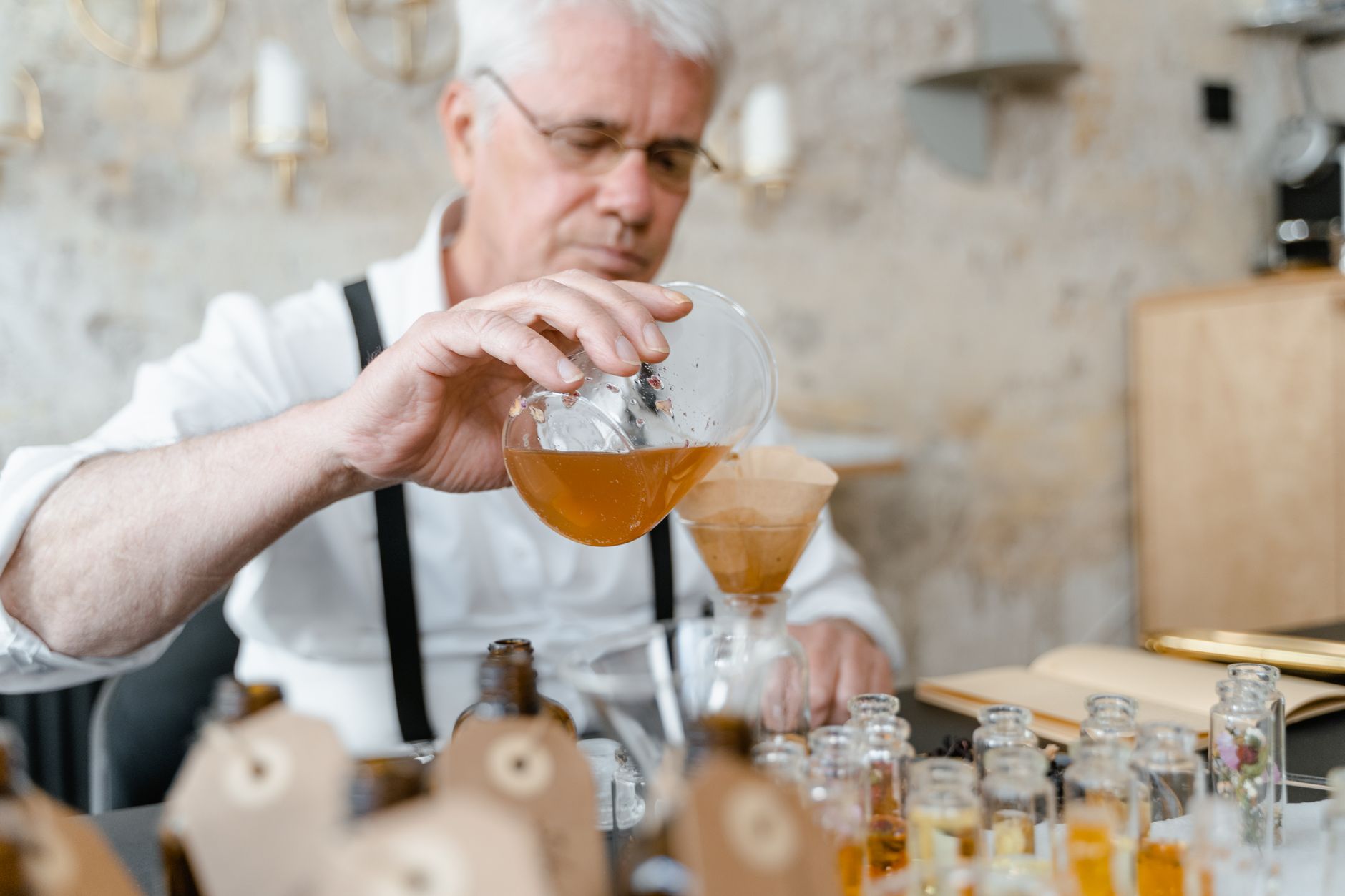
Slow living fragrances are also typically more complex and longer-lasting than their mass-market counterparts. Independent perfumers work with higher concentrations of natural raw materials, including aged resins, steam-distilled botanicals, and rare absolutes sourced from small-scale producers. These ingredients interact differently with skin chemistry than synthetic aromachemicals do, evolving through distinct top, heart, and base note phases over six to eight hours rather than projecting a flat, linear scent profile. The trade-off is cost and supply unpredictability. Natural ingredients fluctuate in price and availability based on harvest conditions and regional sourcing constraints. This is why slow fragrance brands release fewer products annually and price them at a premium. The complexity is a direct outcome of the ingredient philosophy, not a marketing claim.
Why Slow Fragrance Philosophy Matters Right Now
Mass-market perfume releases hundreds of new SKUs annually, creating decision fatigue and a sense of disposability around scent. The premium segment is expected to lead the global fragrance market with 56.2% share in 2026 (coherentmarketinsights.com), which signals that consumers are actively choosing to spend more on fewer, better things. Pinterest searches for "niche perfume collection" have risen 500% and searches for "perfume layering combinations" are up 125% (forbes.com). Search behavior reflects intent. These numbers indicate that consumers are not just buying differently; they are researching and thinking about scent differently. Fragrance is increasingly viewed as a core lifestyle element alongside interior design and personal care, not a cosmetic afterthought. South Korean and Scandinavian artisanal fragrance brands are gaining international recognition precisely because they offer cohesive sensory narratives that connect scent to place, material, and daily rhythm in ways that global houses rarely attempt. Consumer motivation research supports this further: 79% of consumers are reducing spending in certain categories, while more than one-third still plan to pay more for products they genuinely value (inriver.com). Slow fragrance sits exactly at that intersection of selective spending and elevated value perception.
How Slow Fragrance Differs from Mainstream Perfume Marketing
Mainstream perfume houses release seasonal flankers and celebrity collaborations tied to short attention cycles, prioritizing novelty over depth. Slow fragrance is the structural opposite. Mainstream fragrance is usually optimized for scale and speed: formulas are engineered in weeks, tested for broadest demographic appeal, and manufactured using synthetic aromachemicals that deliver consistent, predictable projection at low cost. Independent slow fragrance brands typically spend 12 to 24 months developing a single scent, working iteratively with small-batch materials and refining the narrative alongside the formula. That timeline has real cost implications, which explains the price gap between artisanal and mass-market options.
Marketing language also shifts fundamentally. Mainstream campaigns sell aspiration and status. Slow fragrance brands communicate ritual, memory, and personal resonance. At Kinfolk Notes, we approach every product brief by asking what daily moment the scent should belong to before we consider what it should smell like. Our team has found that this ritual-first methodology creates deeper emotional connections than traditional fragrance development, where scent profile drives the entire creative direction. That question reverses the typical development logic. Packaging and visual identity in slow fragrance brands typically embrace minimalism, restraint, and material honesty. Matte glass, unbleached paper inserts, and typographic restraint replace maximalist luxury cues. The container is designed to disappear into a considered living space, not dominate it. And 42% of global respondents say they only participate in a trend if it genuinely suits them (forbes.com), which confirms that the audience for slow fragrance already holds a filter-first mindset toward consumption.
Examples of Slow Living Fragrance Philosophy in Practice
Concrete brand practices reveal what slow fragrance philosophy looks like beyond the theory. Kinfolk Notes structures its fragrance line around everyday rituals, treating hand cream, room spray, and personal perfume as a unified sensory system. In our experience, this integrated approach means customers experience consistent olfactory identity across their entire daily touchpoints, reinforcing the sensory anchor rather than fragmenting it across disconnected products. Each product shares a core olfactory DNA, so the scent you encounter on your hands at breakfast resonates with the room you return to at night. This coherence is rare. Most brands develop personal care and home fragrance in separate product development silos, producing collections that feel disconnected. Aesop grounds every scent in a specific literary or geographical reference, giving customers an intellectual and emotional anchor that extends the life of the product in memory. Diptyque built decades of brand equity through restraint and ritual around candle-lighting rather than trend-responsive releases. Slow living fragrance sits closer to this niche and indie perfume tradition than to designer houses, sharing the same prioritization of creative authorship over commercial formula.
Independent perfumers increasingly offer scent discovery sets and educational storytelling to replace the in-store testing experience, acknowledging that intentional purchase requires informed choice. Discovery sets allow consumers to test multiple expressions of a brand's sensory world before committing, which is consistent with the slow fragrance ethos of thoughtful acquisition rather than impulse buying. The global perfume market reached $78.84 billion in 2025 and is expected to grow to $86.86 billion in 2026 at a CAGR of 10.2% (thebusinessresearchcompany.com), demonstrating that even as consumers seek intentionality, the category is expanding. Slow fragrance captures a disproportionate share of consumer attention and loyalty relative to its market size. Results speak louder. Consumers practicing slow fragrance often maintain a signature scent for years, occasionally adding one complementary scent seasonally rather than rotating a large collection. That loyalty is the business case for the philosophy.
| Dimension | Slow Living Fragrance | Mainstream Fragrance |
|---|---|---|
| Development timeline | 12-24 months per scent | Weeks to a few months |
| Ingredient sourcing | Natural, small-batch, traceable | Synthetic aromachemicals, scaled supply chains |
| Release cadence | 1-3 new scents per year | Dozens to hundreds of SKUs annually |
| Scent complexity | Evolving top-heart-base arc over 6-8 hours | Flat, consistent projection optimized for first impression |
| Marketing language | Ritual, memory, personal resonance | Aspiration, status, novelty |
| Packaging | Minimalist, material-honest | Maximalist luxury cues or trend-reactive design |
| Consumer relationship | Signature scent held for years | Rotation driven by seasonal launches |
| Price positioning | Premium, reflecting ingredient cost | Wide range, mass-market accessible |
Frequently Asked Questions
What is the difference between slow fragrance and niche perfume?
Slow fragrance is a philosophy about how scent is chosen and worn, prioritizing ritual and intentionality over trends. Niche perfume is a market category defined by independent production and limited distribution. Slow fragrance philosophy typically aligns with niche brands, but not all niche perfumes are designed with a slow living ethos, and the terms are not interchangeable.
How do I start building an intentional fragrance wardrobe?
Begin with one scent that anchors a daily ritual you already practice, such as morning hand care or evening wind-down. Wear it consistently for at least a month before adding anything else. Use a discovery set from an artisanal brand to explore complementary options slowly. Prioritize scents that evoke a specific memory or place over ones that simply smell appealing in the moment.
Is slow living fragrance philosophy just a marketing trend or a genuine shift in consumer behavior?
The data suggests a genuine behavioral shift. Pinterest searches for niche perfume collections rose 500%, prestige fragrance grew 12% globally in 2025, and 42% of consumers say they only engage with trends that genuinely suit them. These are purchase behavior indicators, not just aesthetic preferences. The movement predates recent marketing adoption and reflects broader anti-consumerism and craft appreciation values.
How do artisanal fragrance brands like Kinfolk Notes design for emotional resonance rather than trend appeal?
The design process starts with a daily moment or sensory memory rather than a trend brief. Ingredient selection follows the narrative, not the other way around. At Kinfolk Notes, we ask what ritual a scent should belong to before we consider its olfactory direction. This reverses conventional product development logic and produces fragrances that feel personally meaningful rather than commercially calculated.
Can slow fragrance philosophy apply to home scenting and candles, not just personal perfume?
Absolutely. Home fragrance is often the entry point for slow fragrance practice. Candles, room sprays, and diffusers can be integrated into specific daily transitions, morning light, post-work decompression, or evening reading, using the same intentionality applied to personal scent. Brands that design home and personal fragrance around a shared olfactory identity make this integration seamless and cohesive across your living environment.
What brands are known for slow perfumery?
Aesop, Diptyque, Byredo, Maison Margiela's Replica line, and Kinfolk Notes are frequently cited. Each prioritizes narrative depth, restrained release cadence, and ingredient transparency over trend responsiveness. Smaller independent houses such as Commodity, Ffern, and DS and Durga also operate with slow perfumery values, releasing limited collections on measured schedules rather than chasing seasonal launch windows.
How does slow perfumery differ from niche fragrance?
Niche fragrance refers to independent or limited-distribution production, a market positioning. Slow perfumery refers to a creative and ethical methodology, specifically long development timelines, natural ingredient sourcing, and ritual-centered design intent. Many niche brands practice slow perfumery, but some niche houses still release frequently and trend-responsively. Slow perfumery is the philosophical subset; niche fragrance is the commercial category.
What ingredients are common in artisanal perfumes?
Artisanal perfumes commonly feature steam-distilled botanicals such as lavender, neroli, and vetiver; aged resins including benzoin, labdanum, and frankincense; rare absolutes like orris root and jasmine sambac; and natural musks. These ingredients are sourced from small-scale regional producers, which drives both the scent complexity and the higher price point compared to synthetic aromachemical-based mainstream formulas.
Are slow living fragrances usually more expensive?
Yes, typically. Higher concentrations of natural raw materials, small-batch production, longer development timelines, and traceable ingredient sourcing all increase cost. The premium is real and reflects genuine production differences rather than pure brand positioning. The slow fragrance philosophy reframes this cost as value: fewer bottles purchased over time, each held longer, often produces comparable or lower lifetime spending than cycling through mass-market launches seasonally.
How can I tell if a perfume is trend-driven?
Look at release cadence and marketing language. Trend-driven fragrances launch in clusters tied to seasons, celebrity partnerships, or social media moments, often with vague aspirational copy. Slow fragrance products have specific narrative origins, traceable ingredients, and minimal launch frequency. If the brand cannot tell you where the key ingredients came from or what daily moment the scent is designed for, it is likely trend-driven.
Sources & References
- Post-Modern Fragrances: A Luxury Trend For 2026 - Forbes[industry]
- Perfume Market Size, Trends and YoY Growth Rate, 2026-2033 - Coherent Market Insights[industry]
- Perfume Market Size, Demand & Trends 2036 - Future Market Insights[industry]
- Perfumes Market Top Players And Demand Report 2026 to 2035 - The Business Research Company[industry]
- Consumers in 2026: When Wellness, AI, and Gen Z Redirect Spending - Inriver[industry]
About the Author
Kinfolk Notes
Kinfolk Notes creates artisanal fragrances that elevate everyday moments through slow living sensibilities and emotional storytelling, redefining scent as a core lifestyle experience.